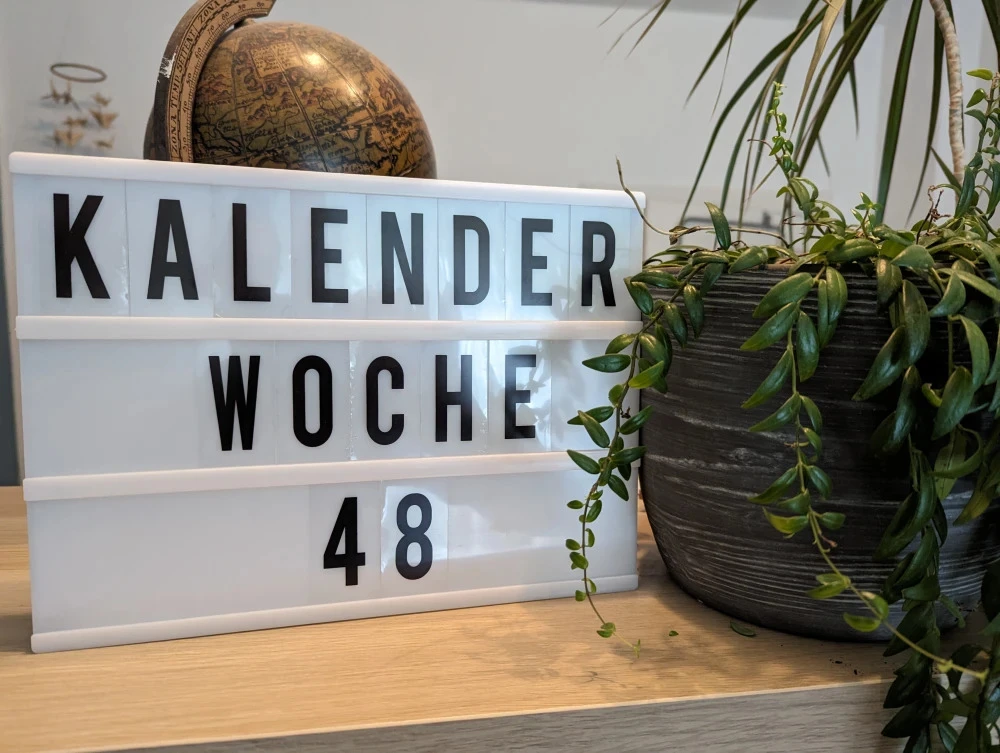
Story of the week 48
They said you should stand up for your own convictions. But what if the supposedly crystal-clear memories that lead to those convictions aren't so clear at all, and above all, aren't true?
My home office is bathed in the light of a daylight lamp. On my monitor, the two most important applications at the moment are in the foreground: the KumoSpace virtual office application and a Miro board for the current project. The focus is on the dashboard wireframe. The discussion is bogged down in a disagreement about how the dashboard navigation works—or more precisely, how it's intended to work. I have a crystal-clear picture and remember exactly how we arrived at the decisions during the concept phase.
I repeatedly explain my understanding: duplicate content, different words. Naturally, I rattle off the points in a convincingly firm voice. As evidence, I cite the interface definition we developed from the templates a few weeks ago. Why is there still disagreement? I don't understand it. And worse still: because I'm so convinced of my crystal-clear memory, I hear the words of disagreement, but I don't listen.
My understanding is the foundation for the optimal implementation for future users. A bit more complex to implement, but doable. And so the discussion—if you can call it that—continues. My counterpart asks me to follow along. Not in terms of content, but virtually. Thanks to a Miro feature, it's enough to click the avatar, and the focus of my Miro board follows the other person's. Convenient.
A journey into the past begins. Our Miro boards were set up by concept expert Stefan Bothe so that previous versions of the concept are located along the horizontal axis. Additionally, insights from discussions on the respective stages are recorded as sticky notes. This allows us to determine why and how the concepts evolved retrospectively. So I'm drawn further and further to the left until we reach the note that clearly demonstrates how wrong my perfect recollection was.
Back in the present, I meekly give in and finally listen properly, while in the background my beautiful, complex feature set, complete with its excellent interface definition, crumbles to dust—zeros and ones. Having overcome my ego and grasped the dashboard's actual function, I'm grateful. The solution is more straightforward, clearer, and well-structured. I could have easily figured that out myself. In a way, I did… back then. It's just that some preconceived notions kept me from it.